Clean Grout: Why It Gets Dirty Learning how to clean grout is essential for maintaining…
Best Flooring for a Bathroom: Top Options for Style, Durability, and Water Resistance
Best Flooring for a Bathroom: What You Need to Know
Choosing the best flooring for a bathroom is one of the most important decisions in any bathroom project. Your bathroom floor must handle high humidity, constant moisture, and daily foot traffic—all while maintaining its aesthetic appeal.
With so many bathroom flooring options available, it’s essential to understand which materials are water-resistant, durable, and suitable for wet areas like showers.
At Sand & Sons Bathroom Remodeling, we help homeowners choose the best flooring options based on their space, style preferences, and long-term needs. If you’re planning a remodel, call (737) 234-9289 to get expert guidance.
 Ceramic Tile: A Classic Bathroom Flooring Option
Ceramic tile is one of the most popular choices for bathroom tile and flooring.
Why Ceramic Tile Works Well
- Affordable and widely available
- Durable and moisture-resistant
- Comes in a wide range of styles and colors
- Easy to clean with low-maintenance
Ceramic tile is ideal for both small bathrooms and larger spaces, offering a versatile solution for homeowners.
Things to Consider
- Grout lines can require regular maintenance
- Choosing dark grout can help hide stains and mildew
Porcelain Tile vs Ceramic Tile: Which Is Better?
Both porcelain and ceramic tiles are excellent options, but there are key differences.
Porcelain Tile
- More dense and highly resistant to water
- Better suited for high moisture areas and shower floors
- Durable enough for high traffic areas
Ceramic Tile
- Slightly more affordable
- Easier to cut and install
- Still offers good water resistance
For most homeowners, porcelain tile is considered one of the best flooring options due to its durability and water resistance.
Natural Stone Flooring: Beauty and Luxury
If you’re looking for a premium finish, natural stone flooring offers unmatched elegance.
Popular Natural Stone Options
- Marble
- Travertine
- Slate
Benefits
- Unique, high-end appearance
- Adds value to your home
- Creates a cohesive look with walls and countertops
Drawbacks
- Requires more maintenance
- Needs sealing to prevent water damage
- Can be affected by temperature changes
While natural stone tile is beautiful, it’s best for homeowners willing to invest in upkeep.
 Luxury Vinyl Tile: Affordable and Waterproof
Luxury vinyl tile (LVT) has become a popular choice for modern bathrooms.
Benefits of Luxury Vinyl
- Fully waterproof and ideal for wet areas
- Comfortable underfoot
- Mimics the look of wood or stone
- Easy to install and maintain
Why Homeowners Love It
- Offers a realistic wood appearance
- Fewer grout lines compared to traditional tile
- Great for small bathroom spaces
Luxury vinyl flooring is one of the best choices for homeowners looking for durability, affordability, and style.
Other Bathroom Flooring Options to Consider
While tile and vinyl are the most common, there are other bathroom flooring options worth considering.
Sheet Vinyl
- Seamless installation with fewer grout lines
- Highly water resistant
- Budget-friendly
Laminate Flooring
- Mimics wood but is less water-resistant
- Not ideal for high moisture areas unless specially designed
Natural Wood
- Offers warmth and beauty
- Requires sealing and maintenance
- Not ideal for high-humidity environments
Carpet (Not Recommended)
- Absorbs moisture
- Prone to mildew and mold
Choosing the Right Flooring for Wet Areas and Shower Floors
Not all flooring works well in wet areas like showers.
Best Options for Shower Floors
- Porcelain tile
- Textured ceramic tile
- Natural stone with proper sealing
Key Considerations
- Slip resistance (textured surface)
- Proper drainage
- Water resistance
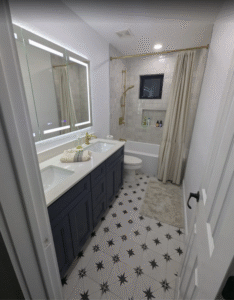
Choosing the right tile size is also important. Smaller tiles provide better grip due to more grout lines.
 How to Choose the Best Flooring for Your Space
Selecting the best flooring depends on several factors:
Consider Your Space
- Small bathroom vs full bathroom
- Level of moisture exposure
- Foot traffic
Think About Style Preferences
- Modern vs traditional tile
- Light vs dark tones
- Matching flooring with walls and fixtures
Balance Function and Design
- Choose materials that resist water
- Ensure flooring is durable and easy to maintain
At Sand & Sons Bathroom Remodeling, we help homeowners match their flooring to both function and style. Call (737) 234-9289 for expert recommendations.
Installation, Maintenance, and Longevity
Proper installation is key to ensuring your bathroom floor lasts for years.
Installation Tips
- Ensure flooring is properly installed to prevent water damage
- Use moisture-resistant underlayment
- Seal grout lines when necessary
Maintenance Tips
- Clean regularly to prevent mildew
- Reseal natural stone periodically
- Choose low-maintenance materials when possible
Well-installed flooring can handle high humidity and daily use without issues.
Common Mistakes When Selecting Bathroom Flooring
Avoid these common mistakes when choosing your flooring:
- Selecting materials that aren’t waterproof
- Ignoring slip resistance
- Choosing the wrong tile size for the space
- Not planning for proper ventilation
These mistakes can lead to water damage, costly repairs, and reduced lifespan of your flooring.
Deep Dive: Comparing the Best Bathroom Flooring Materials
When choosing the best flooring for a bathroom, it’s not just about style—it’s about performance. Bathrooms are exposed to constant moisture, temperature changes, and daily wear, making water resistance, durability, and safety the most critical factors.
Below is a deeper breakdown of the most popular bathroom flooring options, helping homeowners make informed decisions based on real-world performance.
Why Water Resistance Matters Most in Bathroom Flooring
The most important factor when selecting bathroom flooring is its ability to resist water.
Bathrooms are high-moisture environments where:
- Water splashes from sinks and showers
- Steam builds up quickly
- Spills and leaks can occur without warning
Water-Resistant vs Waterproof Flooring
- Water-resistant flooring can handle small amounts of moisture, but may eventually allow water to seep through
- Waterproof flooring is completely unaffected by water and offers the highest level of protection
For long-term durability, especially in wet areas like showers, waterproof materials are always the best choice.
Porcelain and Ceramic Tile: The Industry Standard
Porcelain and ceramic tile remain the most trusted options for bathroom floors—and for good reason.
Key Benefits
- Highly durable and built for heavy foot traffic
- Excellent water resistance
- Easy to clean and maintain
- Available in a wide range of styles and finishes
Because of these qualities, tile flooring is ideal for both residential bathrooms and high-traffic areas.
Porcelain vs Ceramic
- Porcelain tile is denser, more water-resistant, and better for high-moisture areas
- Ceramic tile is more affordable and still performs well in most bathroom settings
Both are considered among the best flooring options, offering long-lasting performance when properly installed.
The Importance of Proper Tile Installation
Even the best bathroom tile can fail if it’s not installed correctly.
Key Installation Considerations
- Grout lines must be sealed to prevent water from seeping into the subfloor
- Proper underlayment is essential for moisture protection
- Tiles must be evenly installed to prevent cracking or shifting
Poor installation can lead to water damage, mold growth, and costly repairs—making professional installation critical.
Slip Resistance: A Critical Safety Feature
Bathrooms are one of the most common places for slips and falls, especially in wet conditions.
How to Improve Safety
- Choose slip-resistant tiles for wet areas
- Opt for textured or matte finishes instead of glossy surfaces
- Use smaller tiles to increase traction
Why Smaller Tiles Work Better
- More grout lines provide better grip
- Ideal for shower floors and high-risk areas
Textured porcelain tiles are a popular choice because they combine safety with strong aesthetic appeal.
Luxury Vinyl Flooring: Waterproof and Budget-Friendly
Luxury vinyl flooring, including luxury vinyl tile (LVT) and luxury vinyl plank (LVP), has become one of the fastest-growing trends in bathroom design.
Why Homeowners Choose Vinyl
- 100% waterproof
- Budget-friendly compared to tile and stone
- Easy to install, especially for quick remodels
- Comfortable underfoot
Luxury Vinyl Plank (LVP)
- Mimics natural wood with a realistic appearance
- Softer and warmer than tile
- Ideal for fast renovations
Because of its durability and water resistance, vinyl flooring is a great option for both small bathrooms and high-traffic areas.
 Sheet Vinyl: Seamless Protection
Another variation of vinyl is sheet vinyl, which offers a seamless surface.
Advantages
- Fewer seams mean fewer opportunities for water intrusion
- Easy to clean and maintain
- Affordable and practical
This makes it an excellent choice for homeowners prioritizing function and budget.
Natural Stone: Luxury with Maintenance Requirements
For those seeking a high-end look, natural stone tile offers unmatched beauty.
Popular Stone Options
- Marble
- Travertine
- Granite
Benefits
- Unique, luxurious appearance
- Adds significant aesthetic value
- Enhances the overall look of the bathroom
Drawbacks
- Requires regular sealing to maintain water resistance
- More expensive than other materials
- Needs ongoing maintenance
While natural stone delivers a premium finish, it’s best suited for homeowners willing to invest in upkeep.
Comparing Durability Across Flooring Types
Durability is essential when selecting the best flooring for bathrooms.
Most Durable Options
- Porcelain tile
- Ceramic tile
- Luxury vinyl flooring
These materials can handle:
- Heavy foot traffic
- Moisture exposure
- Daily wear and tear
Moderate Durability
- Engineered hardwood (for low-moisture areas only)
- Natural stone (with proper maintenance)
Choosing durable materials ensures your bathroom flooring lasts for years without needing frequent repairs.
Engineered Hardwood: A Limited Option
While natural wood is generally not recommended for bathrooms, engineered hardwood can work in certain situations.
When It Works
- Low-moisture areas like powder rooms
- Proper sealing and ventilation are in place
Limitations
- Not suitable for wet areas
- Can still be affected by humidity over time
For most bathrooms, tile or vinyl remains the safer choice.
Budget Considerations: Balancing Cost and Value
Cost is always a factor when selecting flooring.
Budget-Friendly Options
- Ceramic tile
- Sheet vinyl
- Luxury vinyl plank
Mid-Range Options
- Porcelain tile
- High-quality vinyl
Premium Options
- Natural stone
- Custom tile installations
While ceramic tile is one of the most affordable options, natural stone tends to be the most expensive due to material and installation costs.
Style and Aesthetic Appeal
Your flooring plays a major role in your bathroom’s overall design.
Popular Style Trends
- Wood-look vinyl planks
- Stone-inspired tile
- Large-format tiles for a modern look
Creating a Cohesive Look
- Match flooring with walls and fixtures
- Choose colors that complement your space
- Consider the size of your room when selecting tile size
Balancing function and aesthetic appeal ensures your bathroom looks great while performing well.
Maintenance Requirements by Material
Different materials require different levels of upkeep.
Low Maintenance Options
- Porcelain tile
- Ceramic tile
- Luxury vinyl
Higher Maintenance Options
- Natural stone (requires sealing)
- Wood (requires careful care)
Choosing low-maintenance flooring can save time and money over the long run.
Final Thoughts: Choosing the Best Flooring for Your Bathroom
Selecting the best flooring for a bathroom comes down to a few key priorities:
- Water resistance: Always choose materials that resist or are fully waterproof
- Durability: Ensure your flooring can handle daily use
- Safety: Opt for slip-resistant surfaces
- Style: Match your flooring to your design preferences
- Budget: Balance cost with long-term value
For most homeowners, porcelain tile, ceramic tile, and luxury vinyl flooring offer the best combination of durability, affordability, and style.
By understanding the strengths and limitations of each material, you can confidently choose the right flooring for your space—ensuring your bathroom remains functional, beautiful, and built to last.
Get a Free Estimate from Sand & Sons Bathroom Remodeling
Choosing the best flooring for a bathroom doesn’t have to be overwhelming. With the right guidance, you can find a solution that fits your style, budget, and long-term needs.
At Sand & Sons Bathroom Remodeling, we specialize in helping homeowners select and install the best materials for lasting results.
We offer:
- Expert flooring recommendations
- Professional installation
- High-quality materials
- Transparent pricing
Call (737) 234-9289 today to schedule your free estimate.
Let’s transform your bathroom into a space that’s beautiful, durable, and built to last.
FAQs About Bathroom Flooring
Porcelain tile and luxury vinyl tile are among the best due to their water resistance and durability.
Yes, luxury vinyl flooring is waterproof, affordable, and comfortable underfoot.
Natural wood can be used, but requires sealing and regular maintenance.
Textured porcelain or ceramic tile is ideal for slip resistance and durability.
Consider water resistance, durability, style, and maintenance requirements.
Related Posts